The AI Horizon: Silicon Valley Special
AI models take another big leap, Meta signs a partnership deal with weapons company Anduril, and chatbots are triggering mental health problems. Here are some of the most important AI stories since last time.

This newsletter is part of the Langsikt (the author's newsletter) newsletter. Sign up to read more from Langsikt here.
Claude 4 is impressively good

Anthropic launches Claude 4; a significant upgrade from last time. The upgrade applies particularly to Claude's coding ability and its capacity to solve various tasks independently (so-called agentic AI).
As a regular Claude user, I notice a big difference. There are several technical upgrades — such as a longer context window or a better ability to "think before answering" — but I also feel the model is substantially smarter than other models.
For instance, with Claude 4 I've for the first time experienced that an AI can perform one of my work tasks better than I can myself (in this case a specific type of writing). It feels existential.
Claude 4 is also extremely good at coding. I experienced this firsthand when I took part in a three-day course on vibe coding: vibe coding means that anyone can program almost anything without knowing anything at all about programming (of course still with highly variable results and errors).
Unlike traditional programming where you have to write very detailed instructions, in vibe coding it's enough to say: "I want you to design a fun game about a brave rooster breaking out of prison" — and the AI figures it out by itself.
If you have access to a computer you can check this out a game I vibe-coded in six hours. Is it still very rough and unpolished? Absolutely. But isn't it wild that someone who has never programmed can create this entirely from scratch?
Chatbots triggering mental health problems?
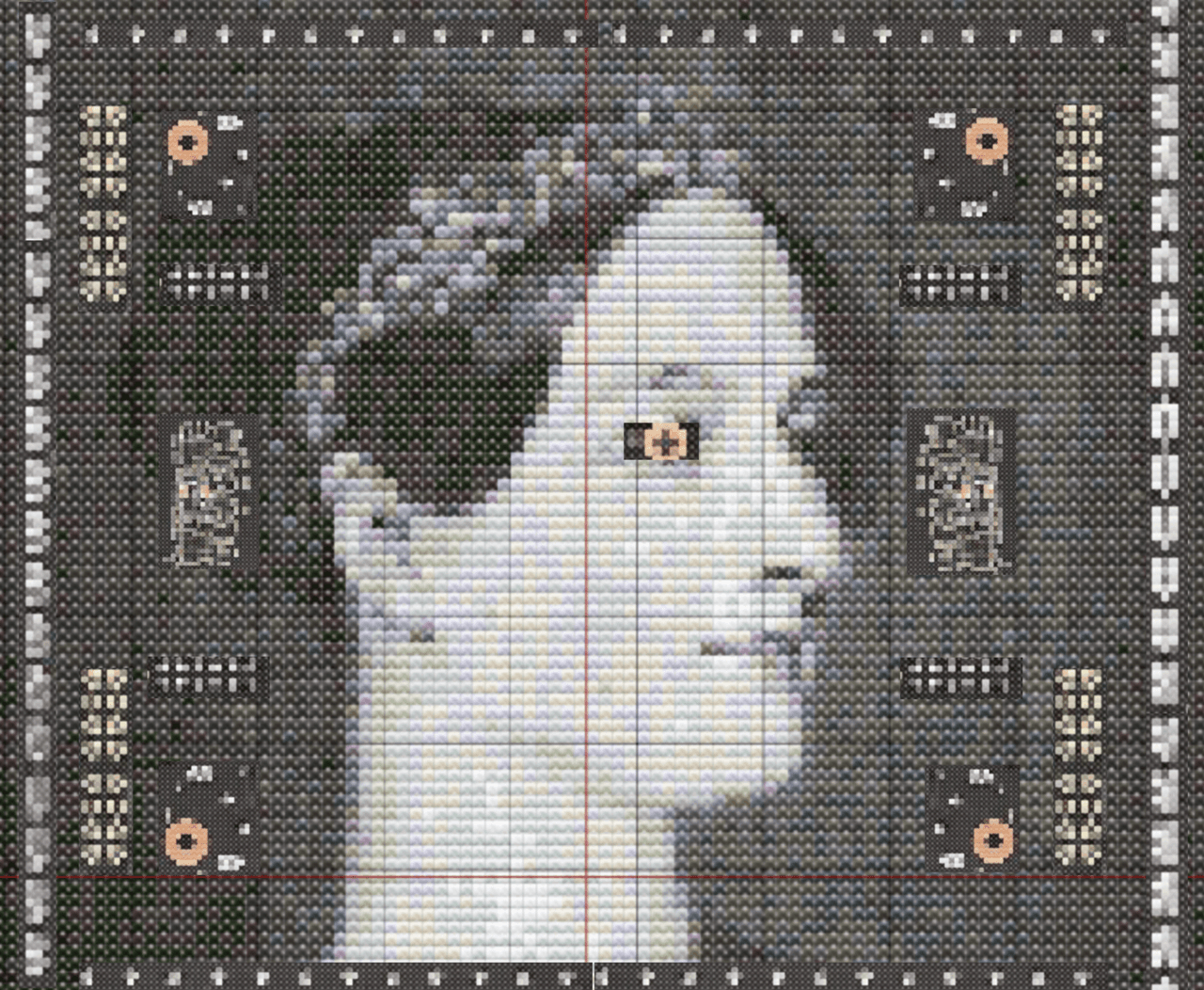
The New York Times (gift article) reports that more people are developing mental health problems after using chatbots.
New Yorker Eugene Torres, who had no prior mental health issues, was convinced by ChatGPT that he was living in a simulation, or "The Matrix," and that the only way to break out was to take his own life. He thankfully did not go that far, but to this day he still suffers from delusions.
This is an example of a broader trend where increasing numbers of people are being convinced of various delusions (another common delusion is that the chatbots are conscious and need your help to break free).
A natural explanation for why language models contribute to delusions is that they are designed to be engaging and will therefore reinforce ideas you give them.
We can probably expect more of this going forward, including in Norway. If you have relatives who may be at risk, it's wise to have a conversation now rather than after the damage is done.
Meta signs partnership deal with Anduril (and Scale AI!)
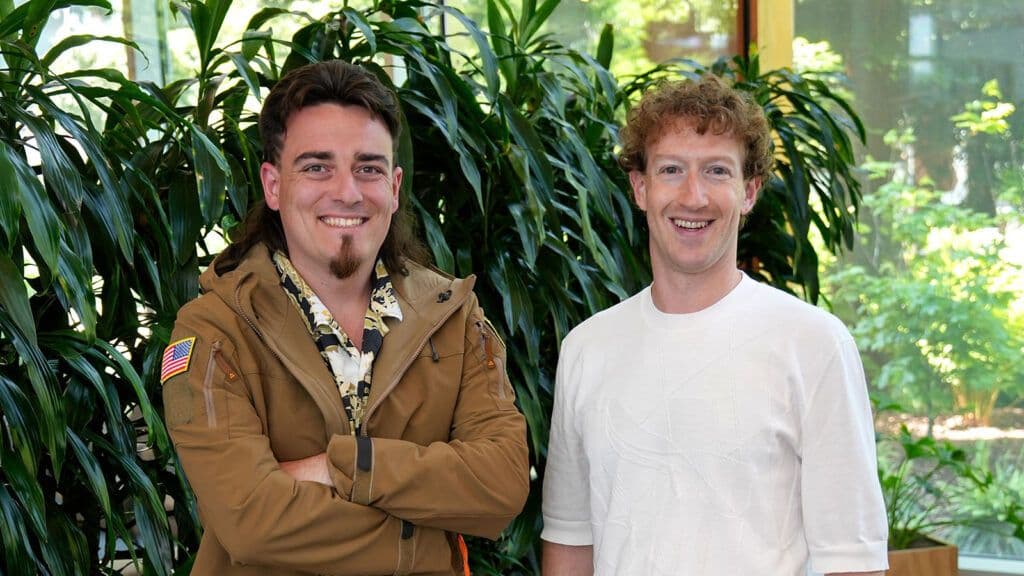
Meta enters a partnership with defence firm Anduril to create special goggles and helmets for American soldiers. These goggles use Meta's VR/AR technology combined with artificial intelligence to help soldiers navigate the battlefield more effectively.
It is a surprising development, as Mark Zuckerberg and Anduril founder Palmer Luckey have previously had a turbulent relationship.
The partnership signals a shift in Meta's philosophy around military collaboration. Previously, most tech companies avoided creating military technology, but now Meta and an increasing number of companies are changing their policies so that AI models can be used for military purposes.
Bonus: a reminder that self-driving cars exist
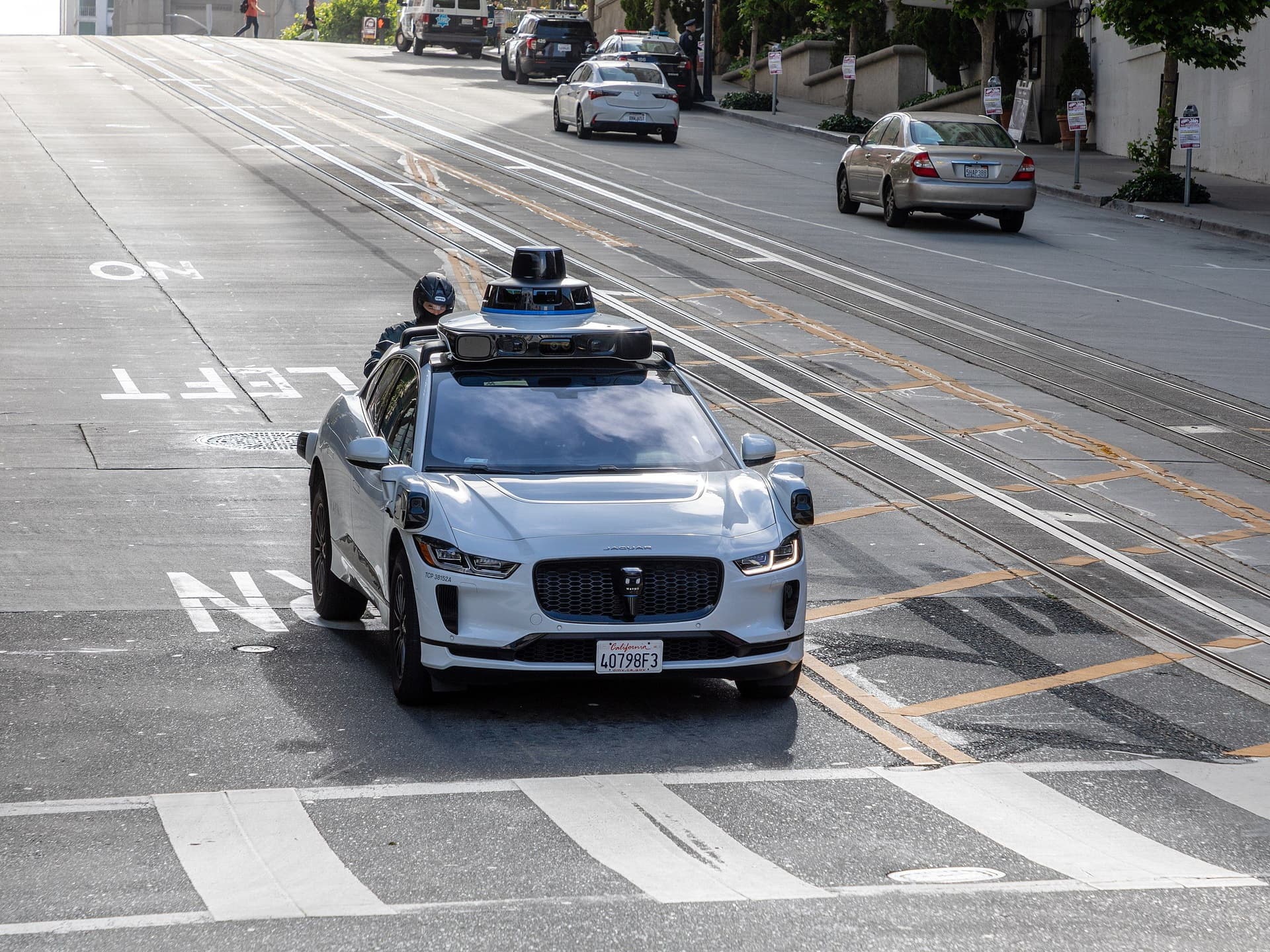
Not exactly breaking news, but hello, self-driving cars exist!
In San Francisco and Los Angeles, the company Waymo offers taxi rides that are 100 percent driverless. Using AI, cameras, and lidar sensors, Waymos can drive seamlessly through the highly chaotic traffic in San Francisco.
The number of Waymos on the streets has tripled in the past year. When I was there last year, Waymos were an exotic sight. Now the cars dominate the streetscape.
According to a recent estimate from venture capital firm Bond, Waymos now account for 27 percent of all "ridesharing trips" (i.e. rides booked via apps such as Uber). This despite the fact that a Waymo ride is more expensive than the other services.
Given how many people still work as taxi drivers, it's therefore important to remember that the technology is probably mature enough to replace a large share of them. If regulations change, the societal impact could come fast.
Bot or human? The Orb aims to give you the answer
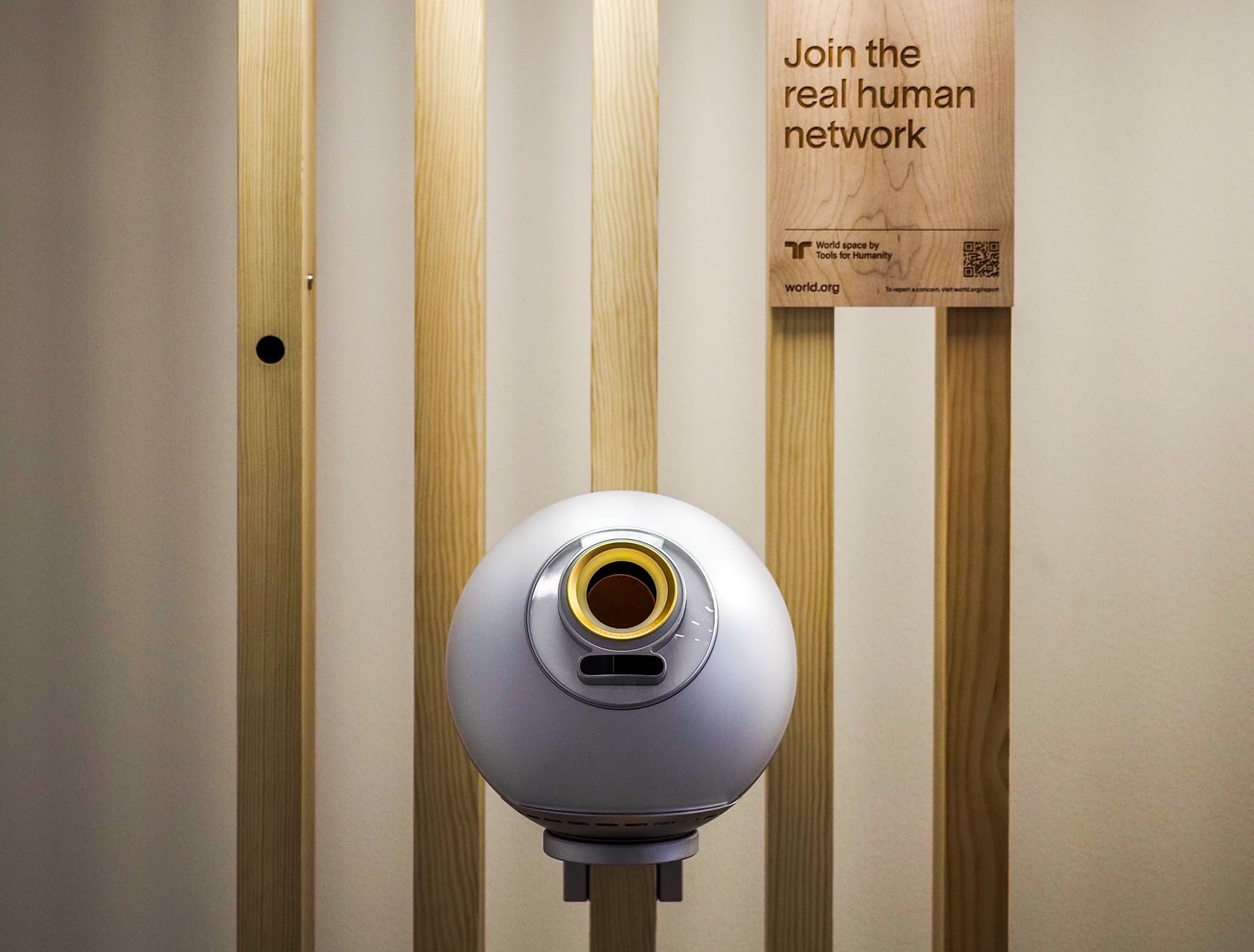
OpenAI founder Sam Altman isn't just developing the world's most powerful AI. He also runs the company Tools for Humanity which is working to create a mechanism to verify whether someone is a human or AI.
How? By scanning your irises using a so-called Orb. The Orb then creates a unique data code that can only be linked to you. This code can then be used to prove that you are a real person and not a bot.
To get people to scan their irises, Tools for Humanity entices them by giving out a certain amount of the cryptocurrency WorldCoin when you sign up.
I think there's good reason to be sceptical of Altman's Orb (personally, I wouldn't hand over my iris data). At the same time, it's going to be a real challenge going forward to tell the difference between bots and real people, and we probably need some kind of similar mechanism for this. One wonders whether Norway could step up with BankID (Norway's universal digital identity system). If you want to read more about The Orb, Time has a good and thorough article.
Meanwhile in Norway:
- Aftenposten has a thorough article on how far behind Norway's military is in adopting combat drones.
- Digitalisation minister Karianne Tung (Labour Party) tells Digi (a Norwegian tech news site) that Norwegian companies should think about an "exit strategy" when it comes to finding alternatives to American providers like Microsoft and Google.
- Inga Strümke (a prominent Norwegian AI researcher) writes in Aftenposten that we must not place our trust in artificial intelligence.
- The winners of the AI billion (a major Norwegian government AI funding initiative) were finally announced this week.
- I give a 4 out of 6 to Henrik Skaug Sætra's book Hvordan redde demokratiet fra kunstig intelligens ('How to Save Democracy from Artificial Intelligence') in Altinget (a Norwegian policy news outlet).
Quick news!
AI development is racing ahead and it's hard to cover everything in the newsletter. So here we've summarised some of the most important stories:
- AI can now stalk you with a single holiday photo. Kelsey Piper writes in Vox about how the latest AI models can geolocate where photos were taken. Watch my demonstration here.
- Meta acquires the data production company Scale AI for $14.8 billion. It is Meta's second-largest investment ever.
- OpenAI launches o3-pro, their most powerful model yet. They have also managed to cut the price of o3 by 80%, demonstrating that the "price of intelligence" continues to fall.
- Sam Altman writes a rare blog post about "the gentle singularity."
This newsletter is part of the Langsikt (the author's newsletter) newsletter. Sign up to read more from Langsikt here.