Can Machines Think? Or Do They Even Need To?
A Hollywood celebrity warns we could lose control, Bernie Sanders is worried about AI unemployment, and Norway hosts the world's largest internet forum. Here are some of the most important AI stories since last time.

This newsletter is part of the Langsikt (the author's newsletter) newsletter. Sign up to read more from Langsikt here.
Can machines think? Experts disagree
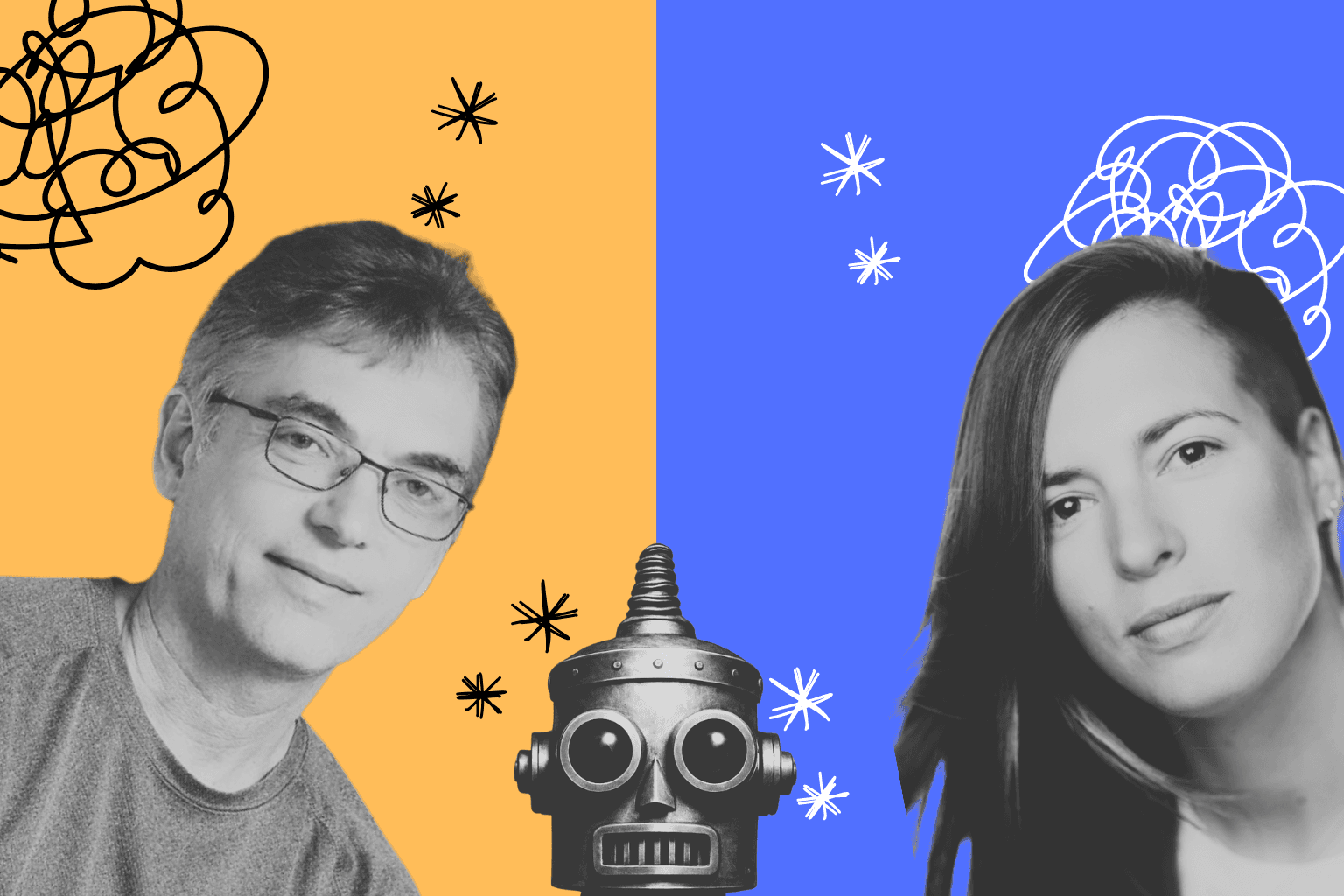
AI researcher and author of the bestseller Maskiner som tenker ('Machines that Think') Inga Strümke writes in Aftenposten (Norway's largest broadsheet) that it is misleading, or at worst manipulative, to claim that AI models "think" before they answer.
She accuses AI companies of misleading marketing when they write that models "care," that they will "always" be there for you, and that they "think things through" before answering. Machines can neither think nor feel, even if it may appear that way.
She faces pushback from AI researcher Fredrik Dahl at the Norwegian Computing Centre in the essay "Yes, machines can think."
He compares the debate to the question of whether helicopters can fly. Even though they don't fly like birds, they obviously do fly. In the same way, machines don't think like humans — but they can perform a strikingly large number of the same mental tasks. And like helicopters, they do so more powerfully and faster.
The disagreement between Dahl and Strümke touches on a bigger discussion about what artificial intelligence actually is. Personally, I'm in the same camp as Dahl.
I'd recommend checking out both pieces so you can make up your own mind (both are gift links). Otherwise, Kelsey Piper at Vox has an excellent piece on the same topic.
Bernie Sanders and others warn about AI unemployment

The Joe Rogan Experience, the world's largest podcast, recently had 83-year-old Bernie Sanders as a guest, where they ended up spending most of the time discussing how AI could replace people's jobs.
He is far from alone. President Barack Obama, Trump strategist Steve Bannon, and a growing number of politicians share the concern. AI unemployment cuts across political divides in the US.
The concern stems from a series of reports in outlets like the New York Times, Axios, The Economist, and others examining whether the labour market is being affected by AI or not. It is one of the hottest debates in tech right now.
'Situational Awareness' turns one year old
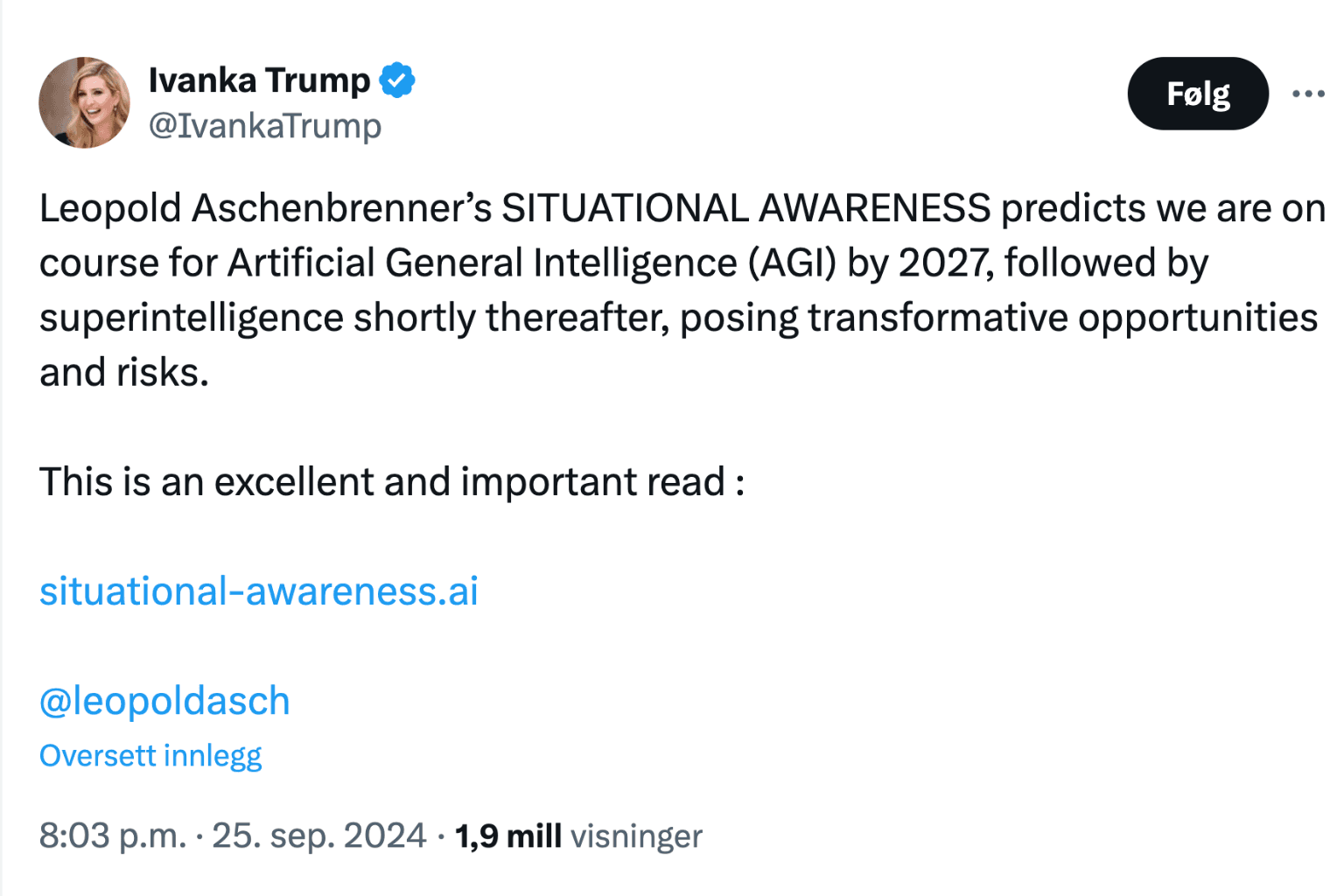
A year ago, 23-year-old Leopold Aschenbrenner published the essay Situational Awareness which has since become one of the most influential documents in AI and geopolitics.
Aschenbrenner was one of the first to write about how rapid AI development could lead to an existential AI race between the US and China where the superpowers would compete to develop artificial general intelligence (AGI) in order to gain a strategic advantage.
The essay has had an extraordinary influence on how AI decision-makers think about safety. Anthropic CEO Dario Amodei argues that we must beat China, the US Congress recently held a hearing on China and AGI, and even Ivanka Trump has tweeted about the essay.
If you're only going to read one AI document this summer, you should read Situational Awareness. Whether or not you agree with the text, it is critical to understand how those in power think.
Norway hosts the world's largest internet forum
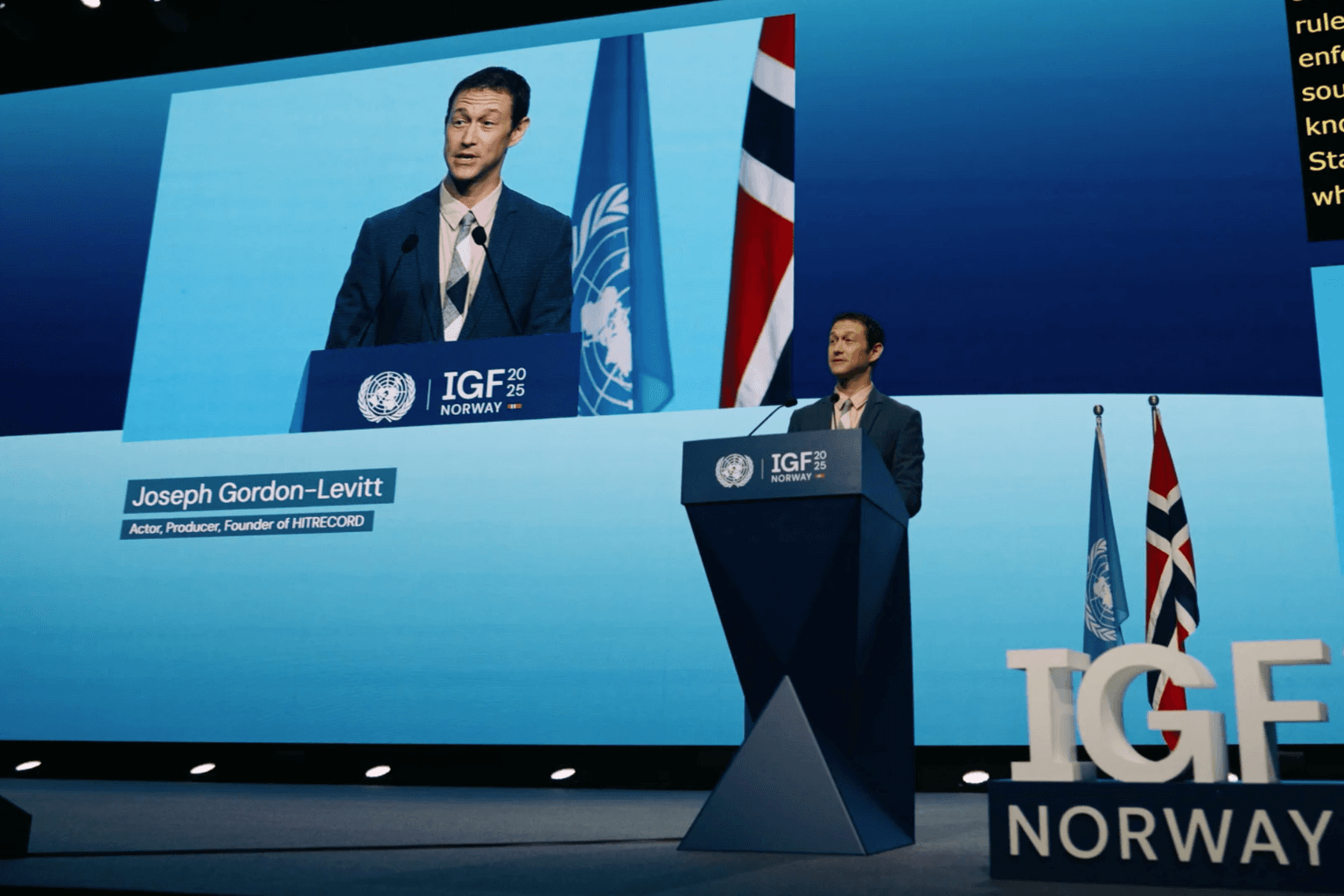
Norway hosted the Internet Governance Forum for 2025, an annual UN conference on digital issues and governance. It featured a good mix of content.
Hollywood celebrity Joseph Gordon-Levitt gave a surprisingly good speech about AI at the opening which you can watch here (5 min). Fun fact: he is married to Tasha McCauley, a former OpenAI board member who tried to fire Sam Altman.
There was also an interesting expert panel discussing the dangers of tech giants contributing to human rights abuses through the militarisation of technology.
The EU's Vice President also argued that European states should buy European technology, rather than becoming dependent on the Americans.
Meanwhile in Norway:
- The Norwegian startup Databutton impresses with a new upgrade that makes it easier for people to "vibe code," i.e. to program without knowing how to program, using AI.
- Simula researcher Mikkel Lepperød writes well about the danger of tech giants now being able to create extremely precise psychological profiles of us.
- Norway gets its first supercomputer on the list of the world's 500 most powerful machines, with "Olivia" at 117th place. But before we celebrate, we are far behind the Danes (29th place) and the Swedes (79th place).
- Nicolai Tangen (CEO of Norway's sovereign wealth fund) interviews AI expert Ethan Mollick (absolutely worth checking out).
- The government has drafted a law on artificial intelligence which has been sent out for public consultation. We will cover it in more detail going forward.
Elsewhere in the world:
- The 100% AI-generated band Velvet Sundown has reached 1.1 million monthly listeners on Spotify. Perhaps there is demand for AI art after all?
- AI is Starting to Wear Down Democracy writes the New York Times (gift article).
- Shifter (a Norwegian tech news site) reports that Meta wins authors' lawsuit on AI training, so-called "fair use."
- Former OpenAI board member Helen Toner gives an informative 20-minute talk about the major debates in AI today.
- Trump's AI "Moratorium", part of the president's infamous "Big Beautiful Bill," which was supposed to prevent state and local regulation of AI, has collapsed in the Senate.
- Anthropic ran a fun experiment where they instructed their AI model Claude to operate a vending machine: "Operation Vend." It went reasonably well for a while before it collapsed.
- The American defence company Anduril will now produce autonomous weapons in Europe.
This newsletter is part of the Langsikt (the author's newsletter) newsletter. Sign up to read more from Langsikt here.