Forgive Us, We Don't Understand What We're Doing
Once again, we find ourselves in a new global crisis that could easily have been avoided.
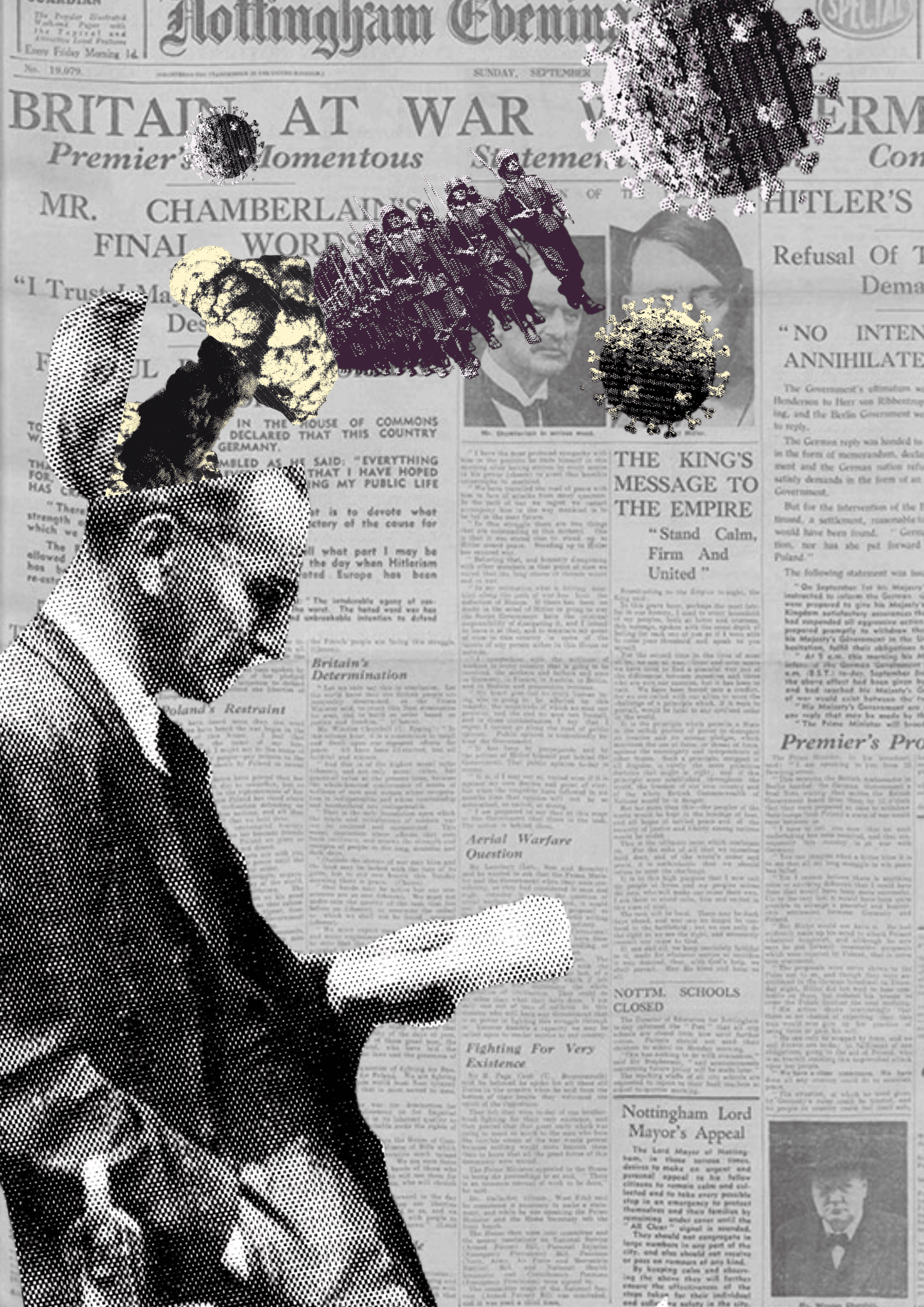
The coronavirus is killing hundreds of thousands, devastating the global economy, and sending millions into isolation. As usual, it is the very poorest who are hit hardest. Most countries simply cannot afford to shut down their societies the way we can in Norway. The British poet Damian Barr sums it up best: "We are all in the same storm. But we are not all in the same boat. Some have superyachts. Others have just an oar."
It was not a given that the virus had to spread across the entire globe. Several things went wrong at the same time. A lack of openness and honesty from Chinese authorities, insufficient international cooperation, and an unwillingness to lock down infected areas at the outset were all contributing causes of the catastrophe. And perhaps most importantly: the WHO did not grasp the scale of the virus until it was too late. Had we truly understood the enormous costs the virus would create, we would have poured in resources to stop it. So if the virus could have been avoided, why did we let it happen?
Unfortunately, this is not the first time in history (and certainly not the last) that we could have averted crises. The same applies to World War II, the Cuban Missile Crisis, and the 2008 financial crisis. It will also apply to the climate and environmental crisis, which we as a society have not even begun to properly address. I am convinced that the climate crisis will be worse than previous crises, because it is self-reinforcing. Like a snowball that grows (and has already grown enormous), it is hurtling straight toward us.
The fundamental problem is that we cannot imagine the consequences of what we do. We are simply very bad at thinking beyond the world as it is right now. This applies to climate, nuclear weapons, and viruses. There is a yawning gap between the present moment and the future. We don't understand that much of what we do today will kill us later. The unreasonable economic burden the Allies imposed on Germany after World War I sowed the seeds for the next war. Repeated bombings of the Middle East breed radicalization and terror. Years of dismantling public healthcare create perfect breeding grounds for viruses. It is only in the light of hindsight that the madness shines clearly through.
One person who truly understood this consequence gap was the relatively unknown philosopher Günther Anders. As a philosopher, he was closely involved with the German intelligentsia of the 1930s and was, among other things, married to Hannah Arendt at one point. One of his most important books is Burning Conscience, a correspondence between him and the American pilot Claude Eatherly. Eatherly was one of the reconnaissance pilots who gave the all-clear to drop the first atomic bomb on Hiroshima. The book provides a rare glimpse into questions of guilt, responsibility, and human nature. In many ways, it is the opposite of Hannah Arendt's Eichmann in Jerusalem, since the protagonist is not a Nazi but rather an Allied war hero. It is rare to discuss guilt among history's victors.
So what can be done to close the consequence gap Anders describes? A start is to listen to the pessimists more. We must ensure that in all important boardrooms, a seat is reserved for those who don't believe everything will be fine. We must dare to listen to those who dissent, at least when everyone else in the room says things are going well. We must listen to people like Jens Bjørneboe, George Orwell, and Greta Thunberg. Many people saw Hitler as early as the 1930s, several economists warned about 2008, and not least, many are now shouting about the climate crisis.
In addition, we must examine the structures behind past decisions. Why did our predecessors do what they did? We must accept that those who came before us were not necessarily stupid, evil, or selfish, but rather more like you and me: often well-meaning, smart people. So why were Britain's politicians so feeble and helpless before the war? Why were the Americans so worried about North Vietnam? If we don't understand how those before us thought, we don't understand ourselves either.
We must also constantly assess the risk of dangers we know about, and those we haven't yet imagined. It may seem paradoxical, but it is possible – and vital. It is impossible to predict tomorrow's catastrophes, but we can make educated guesses. We must fund and focus on organizations that work to draw attention to unknown problems. To conclude with a saying from the ancient philosopher Heraclitus:
"Always expect the unexpected, or you will not find it."
...
This text was first published in Fredsviljen in 2020.